Our Services
Professional excavation and site services from Jonesboro, IN and surrounding areas for residential, commercial, and agricultural projects. Modern equipment, experienced crew, code-compliant work, and transparent estimates. Contact us today for a site assessment and plan.
-
Our consultation service covers the full spectrum of site preparation and development—planning, permitting, grading, utilities coordination, erosion control, and on-site problem-solving. We’ll work with you to:
Clarify project goals and constraints
Assess site conditions and risks (soil, drainage, access, environmental)
Recommend appropriate grading and earthwork strategies
Identify permitting and regulatory requirements
Outline utility coordination and trenching considerations
Suggest cost- and time-saving sequencing and phasing options
Troubleshoot unforeseen issues and provide mitigation options
What you’ll get in a consultation:
Focused, actionable advice tailored to your project stage
A clear list of next steps and priorities
Practical recommendations to reduce risk and optimize costs
Guidance on when to engage engineers, surveyors, or specialty contractors
-
Flexible, expert land‑clearing advice when you need it.
What we cover
Site assessment and feasibility: review site conditions, access, soil type, drainage, and potential hazards.
Permits and compliance: guidance on local regulations, required permits, and best practices for documentation.
Scope and budgeting: define the work scope, prioritize tasks, and estimate time and cost for clearing, grading, and haul‑off.
Equipment and methods: recommend appropriate equipment and clearing methods (mechanical clearing, selective removal, mulching) tailored to your site and objectives.
Erosion and sediment control: strategies for minimizing runoff, stabilizing slopes, and protecting nearby watercourses.
Problem solving on site: troubleshooting unexpected conditions—rock, buried debris, wet areas, or access limitations—and practical remediation options.
Phase planning and scheduling: sequence work efficiently to avoid rework and streamline contractor coordination.
-
Book a quote for targeted guidance across planning, site evaluation, soil and compaction strategies, drainage and grading, material selection, and on-site problem-solving.
Clarify your project goals and scope
Assess site-specific risks and requirements
Recommend optimal pad elevation, compaction standards, and subgrade preparation
Advise on drainage, erosion control, and moisture mitigation
Help select suitable fill, base materials, and compaction equipment
Outline practical next steps, timelines, and cost considerations
Identify opportunities to improve efficiency, durability, and long-term performance
-
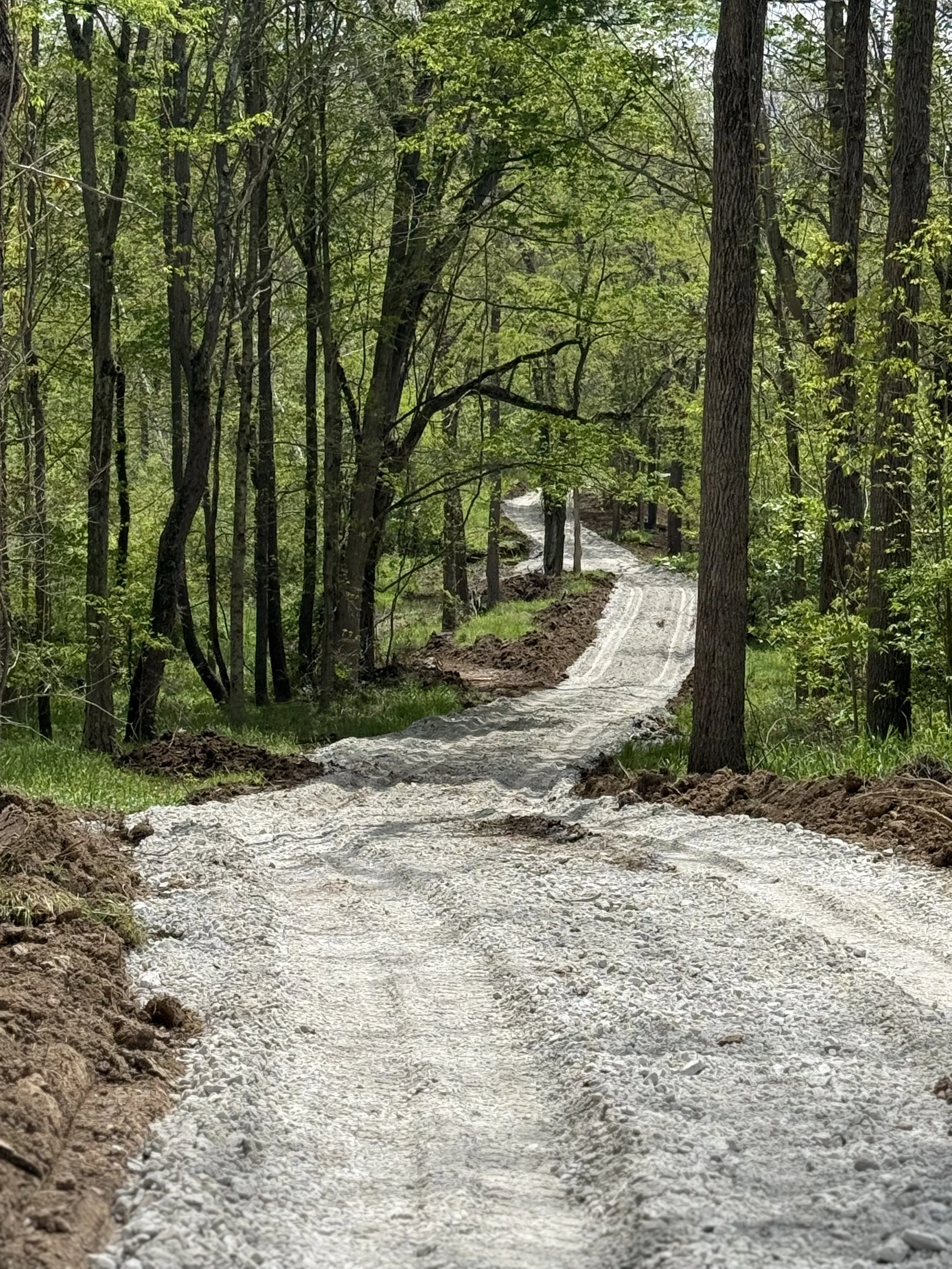
Driveway, Grading, and Installation includes:
Site Preparation
Clear and remove vegetation, debris, and existing pavement within the work area.
Strip and stockpile topsoil where required for re-spreading or disposal.
Identify and mark underground utilities; coordinate potholing if necessary.
Grade site to preliminary contours to facilitate drainage and construction access.
Subgrade Preparation
Scarify and proof-roll existing subgrade to a minimum depth of 6–12 inches depending on project requirements.
Remove and replace soft or unsuitable soils with structural fill or aggregate as specified.
Compact subgrade to specified density (typically 95% Standard Proctor or as directed).
Install geotextile fabric where required to separate subgrade and aggregate layers or to control erosion.
Drainage Structures and Culverts
Excavate and install culverts, headwalls, end sections, and flared inlets per plan.
Provide trenching, bedding, and backfill for pipes with proper compaction.
Grade roadside ditches, swales, and outlets to promote positive drainage away from pavement.
Install catch basins, manholes, and storm inlets as specified.
Base Course Aggregate
Furnish and place specified aggregate base material (crushed stone, gravel, or recycled materials).
Spread aggregate in uniform lifts (typically 4–6 inches) and compact to required densities.
Fine-grade base course to true line and grade to achieve final pavement profile.
Apply dust control and moisture conditioning to obtain optimal compaction.
Subbase and Stabilization (if specified)
Place subbase layers of lower-quality aggregate where additional support is required.
Perform soil stabilization using cement, lime, or chemical binders as directed.
Compact stabilized layers and allow curing time when applicable.
Shoulders, Edging, and Finish Grading
Construct shoulders and edges to specified widths and slopes.
Fine-grade adjacent areas and re-spread topsoil and seed or mulch as directed.
Install erosion control measures (silt fence, erosion mats, hydroseed) where required.
Traffic Control and Safety
Implement traffic control plans to protect workers and the public.
Provide signage, flagging, temporary barriers, and detours as necessary.
Cleanup and Project Closeout
Remove construction debris and unused materials from site.
Final sweep of paved surfaces and restoration of disturbed areas.
Provide as-built documentation, warranties, and operation/maintenance guidance for drainage features.
Notes:
Quantities, material specifications, and compaction requirements to be provided per project plans or client specifications.
-
Scope of Work
Install underground utilities within prepared excavation trenches, including but not limited to water mains, sanitary sewers, storm drains, gas lines, electrical conduit, and telecommunications conduit.
Work includes placement of pipe/conduit, bedding, backfill, compaction, joints and connections, fittings, service laterals, valves, manholes, vaults, cleanouts, and necessary temporary supports or shoring.
Materials
Pipes, conduits, fittings, and valves must meet project specifications and applicable standards (AWWA, ASTM, ANSI, NEMA, local codes).
Bedding and backfill materials to meet gradation and compaction requirements; imported granular material where shown or required.
Corrosion protection, wrapping, or encasement as specified (bituminous coatings, polyethylene wrap, concrete encasement).
Pre-construction Requirements
Verify utility locations and depths; obtain utility locates and clearances; notify utility owners before excavation.
Review and comply with all project drawings, specifications, and permits for utility installation.
Provide traffic control, erosion and sediment control, and site protection per plans and regulations.
Install temporary measures for dewatering or groundwater control if required.
Excavation and Trench Preparation
Excavate trenches to required line and grade, leaving undisturbed bell areas or invert benches where specified.
Maintain trench width to allow adequate working room, fittings installation, and compaction access.
Provide shoring, bracing, sloping, or trench boxes to comply with OSHA and local safety regulations.
Remove unsuitable material and replace with approved subgrade material as directed.
Handling and Installation
Inspect materials on delivery; handle to prevent damage and contamination.
Place pipe/conduit on prepared bedding; maintain specified alignment and grade.
Make joints per manufacturer’s recommendations; verify watertightness where required.
Install fittings, reducers, taps, service connections, valves, and cleanouts in accessible locations and per detail.
Install manholes, vaults, and structures on stable subgrade with proper bedding/haunching and sealing of joints.
Backfill and Compaction
Backfill in lifts with approved materials; compact to required densities (specify percent of standard/proctor or project requirement).
Use selected fill for final cover to achieve designed separation from other utilities and surface improvements.
Restore surface and pavement per restoration requirements after backfilling and compaction testing.
Testing and Inspection
Pressure test, leakage tests, deflection tests, and CCTV inspection as specified for each utility type.
Conduct compaction testing and submit results to engineer for acceptance.
Correct deficiencies and repair leaks or defects at contractor’s expense.
Coordination and Records
Coordinate with other contractors and utility owners to maintain clearances and prevent conflicts.
Maintain accurate as-built records of utility locations, depths, and materials; submit record drawings upon completion.
Safety and Environmental
Comply with all safety regulations, including confined space entry procedures for manholes and vaults.
Control erosion, runoff, and sediment; protect water quality.
Dispose of excavated materials and waste according to regulations.
Submittals
Submit product data, shop drawings, coordination drawings, certificates, material test reports, and proposed installation procedures.
Submit traffic control and safety plans, dewatering plan if required, and schedule of values.
Warranty
Provide warranty for workmanship and materials for the period required by the contract; promptly repair defects discovered during the warranty period.
-
Excavation & Demolition Services
A+ Excavating provides comprehensive excavation and demolition services for residential, commercial, and industrial projects.
Services Offered
Site demolition: selective interior demolition, full structure teardown, removal of foundations and slabs.
Earth excavation: bulk excavation, trenching, grading, cut-and-fill, and mass earthmoving for building pads, basements, and utility trenches.
Site clearing: tree and brush removal, stump grinding, and clearing of debris and vegetation.
Retaining walls and shoring: temporary and permanent shoring, slope stabilization, and retaining wall excavation and installation support.
Utility excavation and installation support: precise trenching for sewer, water, gas, electrical conduit, and storm drainage.
Material handling and disposal: sorting, recycling, hauling, and responsible disposal of demolition debris and excavated materials.
Concrete breaking and removal: concrete saw cutting, jackhammering, and removal of sidewalks, driveways, curbs, and slabs.
Environmental controls: dust suppression, erosion and sediment control, sediment basins, and compliance with environmental regulations.
Site restoration: final grading, compaction, and preparation for landscaping or construction.
Project Types Served
Residential: home demolition, basements, driveways, and lot clearing.
Commercial: retail centers, office buildings, parking lot demolition, and tenant improvement site prep.
Public works: road excavation, utility corridors, and municipal site preparation.
-
Professional drainage and trenching services for site excavation to manage surface and subsurface water, protect structures, and ensure proper grading and runoff control. Work includes excavation, installation of drainage systems, backfill, compaction, erosion control, and final site restoration.
Scope of Work
Site assessment: Verify grades, identify existing utilities, locate water flow paths, and confirm drainage plan and elevations.
Traffic control & protection: Implement safety measures, barricades, and protection for adjacent structures and pavement as required.
Utility locate and protection: Coordinate with utility providers and perform potholing where necessary to verify existing utilities.
Trench excavation: Excavate trenches to required widths, depths, and slopes for drainage pipe, French drains, curtain drains, or perimeter drains. Maintain trench stability and comply with OSHA sloping/shoring standards.
Subgrade preparation: Remove unsuitable material, scarify and regrade subgrade, and place bedding material (washed gravel or sand) to specified density and elevation.
Drainage pipe installation: Furnish and install specified pipe types (perforated HDPE, corrugated pipe, PVC SDR, or smooth-wall ADS), fittings, connectors, cleanouts, and transition pieces. Ensure proper alignment, slope, and invert elevations.
Gravel and filter fabric: Install appropriate filter fabric, surround with graded drain rock or pea gravel, and ensure separation from native soils to prevent clogging.
Catch basins and inlets: Furnish and install precast or fabricated catch basins, solid lids/grates, risers, and connection to storm system as specified.
Outlet protection: Provide headwalls, energy dissipators, riprap, or splash pads at discharge points to prevent erosion.
Backfill and compaction: Backfill trenches in lifts using approved material, compact to specified relative compaction, and restore surface to finish grade.
Trench safety & dewatering: Provide trench boxes, shoring, or benching as required; perform dewatering if groundwater is encountered to maintain dry, safe working conditions.
Erosion and sediment control: Install silt fence, sediment basins, inlet protection, or other measures to prevent off-site sedimentation during construction.
Final restoration: Replace topsoil, re-seed, hydroseed, or install sod; repair pavement, sidewalks, curbs, or landscaping disturbed during work.
-
Services Include:
Existing conditions survey: verify utilities, locate underground services, and perform pre-construction grade and condition documentation.
Clearing and demolition: remove vegetation, debris, and any non-structural obstructions; stump removal and on-site disposal or hauling as directed.
Mass excavation and material handling: cut and fill operations to achieve specified grades. Haul off-site unsuitable materials and import/stockpile suitable fill as required. Provide segregation and compaction of engineered fill zones.
Rough and finish grading: shape site to meet finished elevations, slopes, and drainage patterns shown on plans; provide final surface tolerances per project specifications.
Trench excavation and backfill: excavate trenches for utilities to required depths and slopes, provide bedding, install backfill and compaction in lifts to achieve specified densities.
Erosion and sediment control: install and maintain silt fences, erosion blankets, sediment basins, and inlet protection; monitor and repair controls throughout work.
Dewatering: provide temporary dewatering systems (pumps, sumps, discharge piping) to maintain dry working areas, including permit compliance and proper disposal of pumped water.
Soil compaction testing and quality control: perform in-place density testing (ASTM/agency specified) and provide documented test results; adjust compaction methods as necessary.
Final cleanup and demobilization: remove temporary controls not required for final stabilization, clean site surfaces, and demobilize equipment.
-
What we do:
Establish erosion and sediment controls, including silt fences and stabilized construction entrances, per project specifications.
Mark and verify pond limits, depth contours, and grade stakes based on provided plans.
Clear and grub vegetation and remove unsuitable surface materials within the pond footprint; stockpile or dispose of material as directed.
Excavate to specified contours and depths, including benches, side slopes, and inlet/outlet structures. Maintain tolerances shown on plans.
Provide dewatering as required during excavation to maintain stable working conditions. Dispose of pumped water in compliance with environmental regulations.
Separate, stockpile, and manage topsoil for future use in final grading or landscaping as specified.
Handle encountered obstructions (boulders, debris, old foundations) per contract: remove and dispose or break to subgrade as directed.
Scarify and compact pond perimeter where required for liner or embankment interface.
Install temporary shoring or slope stabilization if needed for safety and to protect adjacent structures.
Backfill and compact selected areas around inlet/outlet structures and access points as specified.
Fine grade pond bottom and slopes to achieve drainage patterns and specified elevations and tolerances.
Place and test specified aggregate, bedding, or filter materials in inlet/outlet areas and access ramps as shown on plans.
Coordinate installation of pond liner, riprap, outlet control structures, and permanent seeding/erosion control with other trades; excavation subcontractor to provide prepared subgrade per manufacturer requirements.
-
We remove a wide range of unwanted items from residential and commercial properties.
Our 14 yard dump trailer is available to reserve with the following options:
1 Business Day
24 Hours
3 Days
Weekend
Weekly
Call or fill out our contact form to reserve it today!
-
Comprehensive snow removal for residential and commercial properties, including driveway, sidewalk, parking lot, and walkway clearing. Services available as one-time calls, scheduled seasonal contracts, or emergency response.
Included tasks
Plowing: Mechanical clearing of driveways, parking areas, and access roads using trucks and plows sized to the property.
Shoveling and handwork: Manual clearing of steps, narrow walkways, entrances, and areas inaccessible to equipment.
Ice management: Application of salt, sand, or ice-melt products to reduce slippery surfaces and improve traction.
Curb-to-curb clearing: Full-width clearing of parking lanes and drive aisles where specified.
Post-storm cleanup: Removal of windrows against curbs/sidewalks, and clearing around fire hydrants, dumpsters, and utilities.
Service Options & Frequency
Emergency/Call-Out: Single storm response; billed per visit.
Per-Inch Pricing: Charges based on snowfall depth with a minimum fee.
Seasonal Contract: Flat-rate coverage for the season with per-event thresholds (e.g., service triggered at 2" accumulation). Includes priority scheduling and reduced per-event rates.
Push-back Services: Clearing snow from planted beds and eaves, and resetting landscaping edges as needed.
A+ Excavating, LLC is happy to provide dependable and reliable excavation services to Jonesboro, IN and surrounding areas within a 50 mile radius.
communities we serve
Grant County, IN
Blackford County, IN
Huntington County, IN
Delaware County, IN
Madison County, IN
Howard County, IN
Randolph County, IN
Tipton County, IN
Jay County, IN
Henry County, IN
Wells County, IN
Hamilton County, IN
Miami County, IN
Wabash County, IN
Contact us
Interested in working together? Fill out some info and we will be in touch shortly. We can’t wait to hear from you!